





Basic life support is emergency medical care that helps save lives during cardiac arrest or choking. It involves rescue breaths, chest compressions, and using an automated external defibrillator (AED). BLS helps regulate oxygen-rich blood to the brain until professional medical help arrives.

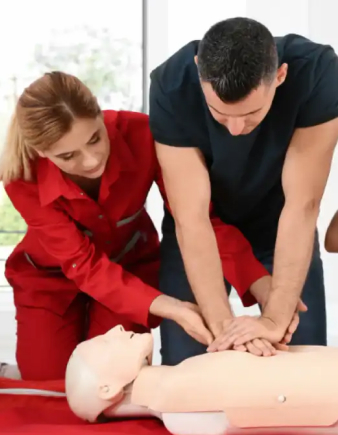
Cardiopulmonary resuscitation is an emergency treatment done when someone’s breathing or heartbeat has stopped. CPR is needed when someone has a heart attack or drowns. Timely cardiopulmonary resuscitation can save the lives of victims of cardiac arrest.

Carry out manual chest compressions as the first step.
Clear the patient’s airway for them to breathe. Do this with a simple swipe of the finger through the upper throat and the person’s mouth.
Pinch the patient’s nose and use your mouth to seal over theirs. Breathe two breaths for every second that passes. Watch the chest rise.

An automated external defibrillator is a device used to help someone experiencing sudden cardiac arrest. It checks the heart's rhythm and delivers an electric shock to restore a normal heartbeat whenever needed.

Basic first aid is the quick help given to someone who is sick or hurt. It can be given to someone experiencing bleeding, cuts, or someone who is unable to breathe.
Basic first aid comprises simple steps to help someone in an emergency before professional medical help arrives. It covers the following techniques:
Gently clean cuts or scrapes with water to prevent infection.
Apply pressure to the wound with a clean cloth to stop the bleeding.
Cool the burn with cold water for at least 10 minutes to ease pain.
Perform the Heimlich maneuver to clear the airway.
Rest and ice the injured area to reduce swelling and pain.
If the person isn’t breathing, start chest compressions to keep blood flowing.
Wounds are injuries where the skin is broken, like cuts, scrapes, or punctures. They can lead to bleeding and infection if not treated properly.
Here is how you can treat wounds:Wash the area with clean water to remove dirt and bacteria.
Apply pressure with a clean cloth to slow or stop the bleeding.
Use an antiseptic ointment to help prevent infection.
Place a bandage or sterile dressing over the wound to keep it clean.
Keep an eye on the wound for signs of redness, swelling, or pus, and seek medical help if needed.

Conscious choking occurs when a person who is awake and alert has a blocked airway and has difficulty breathing. The blockage can be partial, allowing some air to pass. This prevents any air from reaching the lungs.

Burns are injuries caused by chemicals, heat, or electricity that damage the skin. It can be a minor redness caused to the skin to deep tissue damage. Cool the area to reduce pain and prevent further injuries.

Poisoning happens when harmful substances are inhaled, swallowed, or come in contact with the skin. It can cause serious problems such as nausea and breathing difficulties. Call poison control or seek medical help to prevent further harm.
Conscious choking occurs when a person who is awake and alert has a blocked airway and has difficulty breathing. The blockage can be partial, allowing some air to pass. This prevents any air from reaching the lungs.
Burns are injuries caused by chemicals, heat, or electricity that damage the skin. It can be a minor redness caused to the skin to deep tissue damage. Cool the area to reduce pain and prevent further injuries.
Poisoning happens when harmful substances are inhaled, swallowed, or come in contact with the skin. It can cause serious problems such as nausea and breathing difficulties. Call poison control or seek medical help to prevent further harm.
No, BLS and CPR are not the same. While CPR focuses on chest compressions and rescue breaths, BLS, on the other hand, covers additional skills such as an AED and helps recognize emergencies.
Pediatric CPR differs from adult CPR in technique and force. In pediatric CPR, use one hand for chest compressions and a compression depth of about 2 inches. For infants, use two fingers and compress about 1.5 inches.
To give children high-quality compressions, follow these steps:
You must check a pulse for more than 10 seconds. If you do not feel a pulse within the time frame, begin CPR immediately.