Bing Ads
CPR/AED, First Aid & Bloodborne Pathogens Combo

Infant CPR

Our CPR/AED and First Aid for Nervous System Emergencies combo course includes training in Adult, Child and Infant CPR, First Aid and Bloodborne Pathogens certification. The CPR/AED and First Aid certification is valid Read More for 2 years and the Bloodborne Pathogens certification is valid for 1 year, per OSHA guidelines. The course also includes a free printable wallet card. Read Less

(111,773 reviews with 4.8 stars)
$49.95$59.85
Chapters CE Credits Validity Cost Duration ECC Exam Attempts Wallet Card
29 2 Years $49.95 1-2 Hrs Compliant Unlimited Download/Print/Mail
Chapters 29
CE Credits
Validity 2 Years
Cost $49.95
Duration 1-2 Hrs
ECC Compliant
Exam Attempts Unlimited
Wallet Card Download/Print/Mail

Chapter 8: Child and Infant CPR

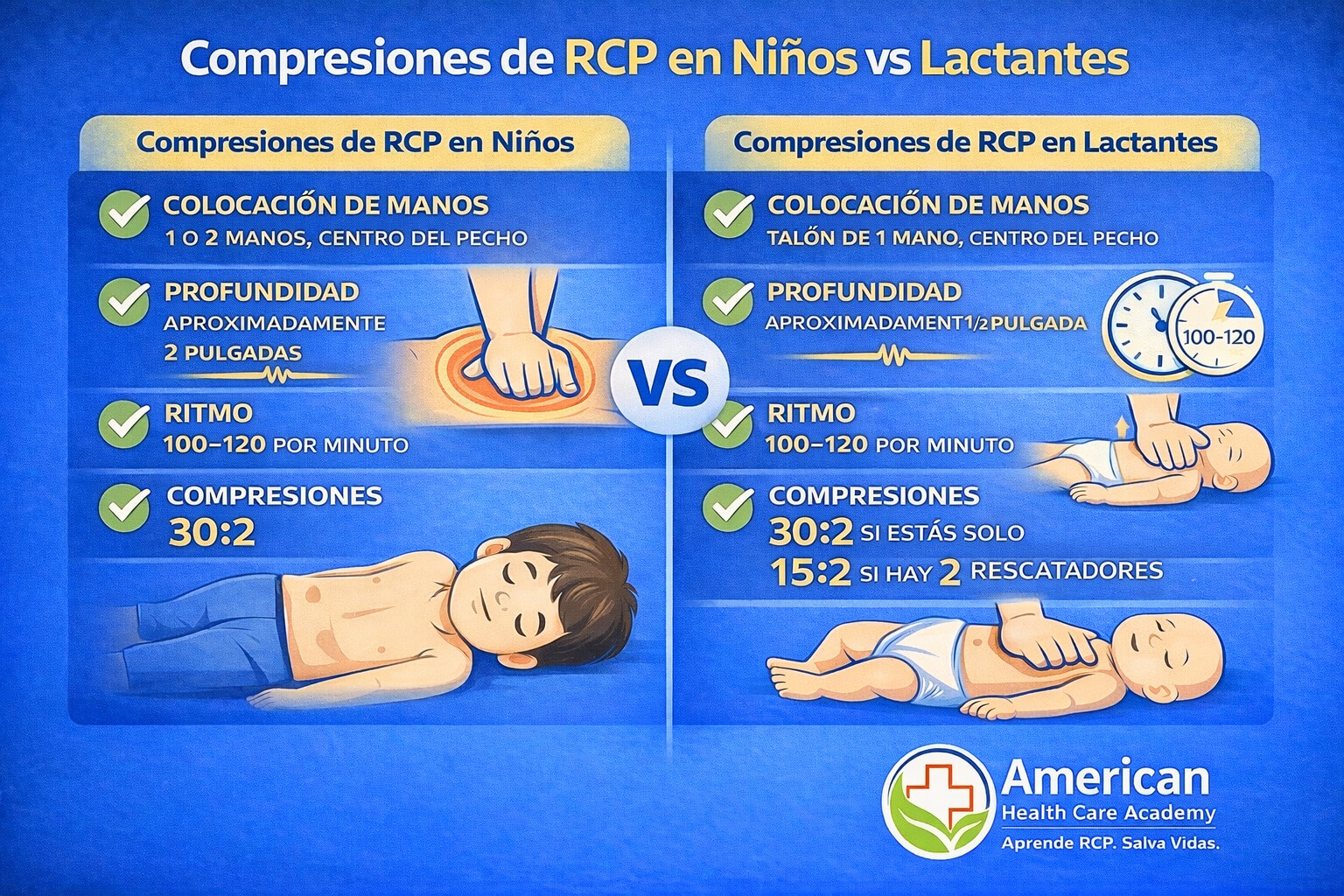
Children and infants often experience cardiac arrest because of breathing problems. Rescue breaths are especially important.

Child CPR

If alone and the collapse was not witnessed:

  • Give 5 cycles of 30 compressions and 2 breaths (about 2 minutes) before leaving to call 9-1-1.

Compressions:

  • Use one hand (or two if needed).
  • Compress at least 2 inches deep (about 1/3 chest depth).
  • Rate: 100–120 per minute.

Airway and breaths are the same as adults.

Infant CPR

Compressions:

  • Use either the two-thumb encircling hands technique or, if you cannot encircle the chest, compress the sternum with the heel of one hand.
  • Hand placement should be in the center of the chest just below the nipple line.
  • Compress about 1½ inches (1/3 chest depth).
  • Rate: 100–120 per minute.

Airway:

  • Tilt the head slightly.
  • Do not over-tilt.

Breaths:

  • Cover both the mouth and nose with your mouth.
  • Give gentle breaths.
  • Watch for chest rise.

If alone and collapse was not witnessed:

  • Give 5 cycles before leaving to call 9-1-1.

Child-and-infant-compressions-cpr

This site is registered on wpml.org as a development site. Switch to a production site key to remove this banner.