Capítulo 7: RCP en Adultos – RCP con 2 Reanimadores y Ventilación con Bolsa-Válvula-Mascarilla (Proveedor de Atención Médica)
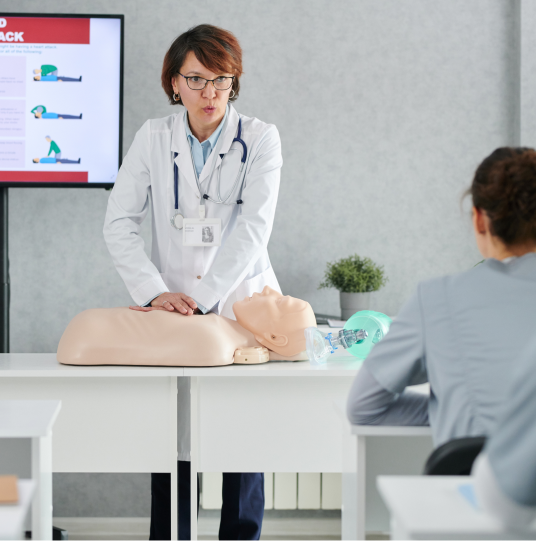
Cuando hay dos reanimadores capacitados disponibles, la RCP debe realizarse como un equipo coordinado. Uno de los reanimadores debe asumir un rol de liderazgo para coordinar las tareas, supervisar la calidad y dirigir los cambios de compresor. La RCP en equipo mejora la calidad de las compresiones, reduce la fatiga y favorece una ventilación efectiva.
RCP en Adultos con 2 Reanimadores
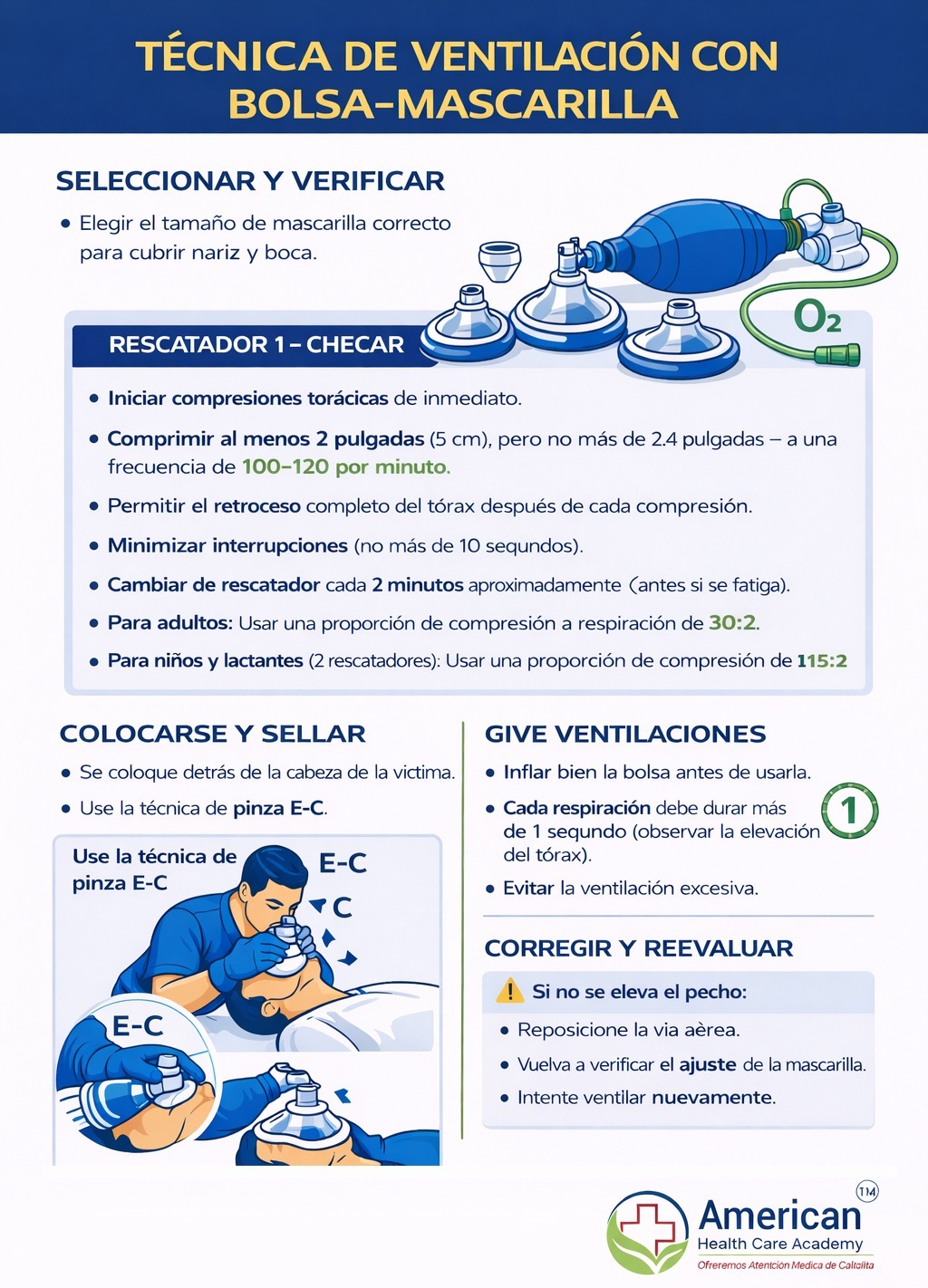
Reanimador 1 – Compresiones
- Inicie las compresiones torácicas de inmediato.
- Comprima al menos 2 pulgadas (5 cm), pero no más de 2.4 pulgadas (6 cm).
- Mantenga una frecuencia de 100–120 compresiones por minuto.
- Permita el retroceso completo del pecho después de cada compresión.
- Minimice las interrupciones (no más de 10 segundos).
- Cambie de reanimador aproximadamente cada 2 minutos (o antes si hay fatiga).
Relación Compresiones-Ventilaciones (Adultos)
- 30 compresiones por 2 respiraciones (30:2)
Reanimador 2 – Vía Aérea y Ventilación
- Abra la vía aérea utilizando la técnica de inclinación de la cabeza y elevación del mentón (a menos que se sospeche lesión cervical).
- Administre las respiraciones utilizando un dispositivo de bolsa-válvula-mascarilla.
- Proporcione 2 respiraciones después de cada ciclo de compresiones.
- Cada respiración debe durar aproximadamente 1 segundo y producir elevación visible del pecho.
- Evite la ventilación excesiva.
- Supervise la calidad de las compresiones y prepare el DEA.
- Coordine los cambios de reanimador de manera eficiente para limitar las pausas.
Uso de un Dispositivo Bolsa-Válvula-Mascarilla (BVM)
El dispositivo bolsa-válvula-mascarilla se utiliza comúnmente en entornos de atención médica para administrar ventilación asistida.
-
- Seleccione el tamaño correcto de mascarilla para crear un sello adecuado sobre la nariz y la boca.
- Utilice la técnica de sujeción E-C para sostener la mascarilla:
- La “C” forma un sello con el pulgar y el dedo índice.
- La “E” eleva la mandíbula para mantener la vía aérea abierta.
- Conecte la bolsa al oxígeno cuando esté disponible (hasta 15 L/min).
- Comprima la bolsa solo lo suficiente para producir elevación visible del pecho.
- Administre cada respiración durante 1 segundo.
- Administre solo el volumen suficiente para producir una elevación visible del pecho.
- Si el pecho no se eleva:
- Recoloque la cabeza.
- Restablezca el sello de la mascarilla.
- Verifique si hay obstrucción visible en la vía aérea.
La RCP de alta calidad en un entorno de equipo funciona mejor cuando todos se comunican con claridad, mantienen las interrupciones al mínimo, utilizan la técnica adecuada de ventilación, cambian de funciones con frecuencia para evitar la fatiga y se apoyan mutuamente para mantenerse firmes y concentrados.