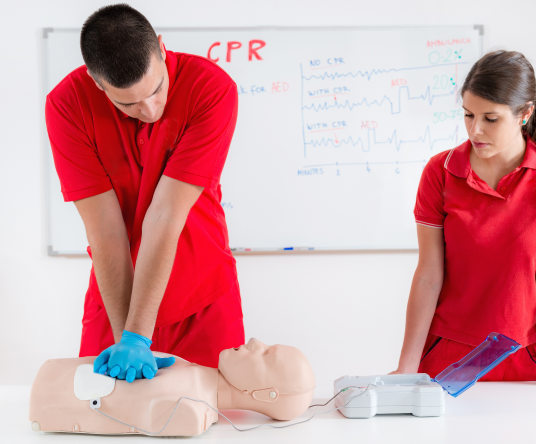
Chapter 6: Using an AED
An Automated External Defibrillator (AED) can help restore a normal heart rhythm.
Use it as soon as it becomes available.
- Turn it on.
- Follow the voice prompts.
- Expose and dry the chest.
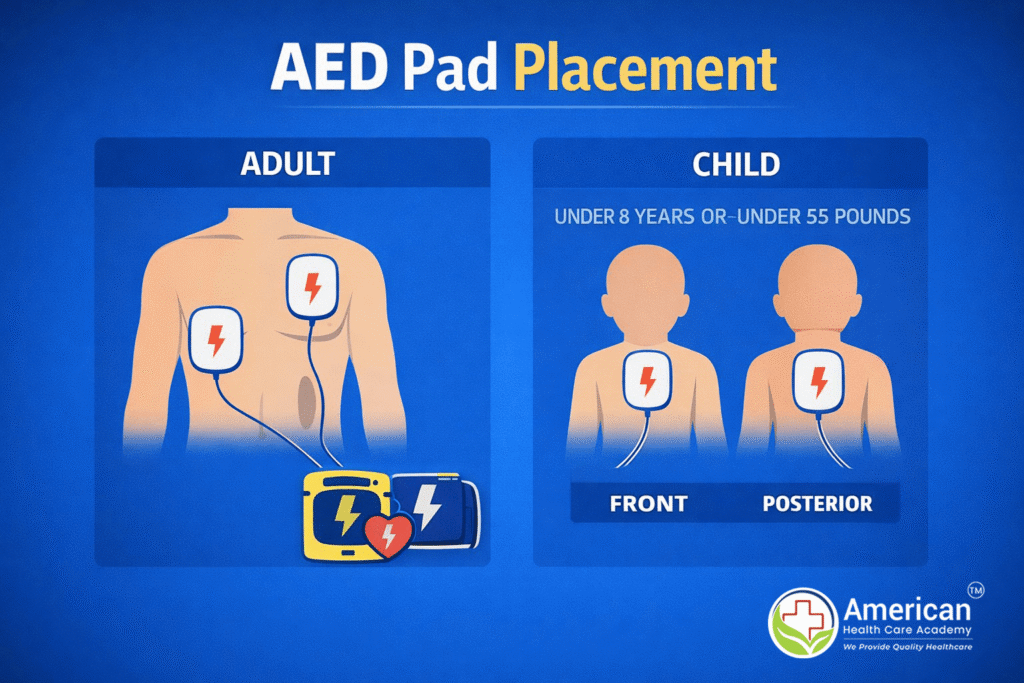
- Apply pads as shown.
- Do not touch the person while the AED analyzes.
- If a shock is advised, make sure everyone is clear and deliver the shock.
- Resume CPR immediately after the shock — or if no shock is advised.
Important:
- Move the person away from water and dry the chest.
- Remove medication patches.
- Place pads away from visible pacemakers.
- Ensure pads stick to dry skin.
- If the person is wearing a bra, you may adjust or move it enough to place the AED pads on the bare chest instead of fully removing it.
- For children under 8 years old or under 55 pounds, use pediatric pads if available.
- If pads may touch, place one pad on the chest and one on the back.
- AEDs may be used on infants if no manual defibrillator is available.
If no AED is available, continue CPR.